Build the fruit picture.
Record location, assessed fruit characteristics, size and grade distribution, harvest timing and availability. Show what was observed, what was estimated and what needs checking.
COMMERCIAL INTELLIGENCE FOR FRESH PRODUCE
Connect what is growing in an orchard with what different buyers can use. Coopfarms is building the evidence to understand the fruit, evaluate destinations for the full grade mix, and make better-informed commitments.
Starting with pomegranates · Platform in development
THE DECISION BEFORE THE DEAL
A grower offers a crop. Each buyer needs particular sizes, qualities, quantities and delivery dates. Making a trade work means finding suitable destinations for the mix—and organising the work between them.
A good price for the best grade is only part of the answer. The remaining fruit, the cost of execution and the terms of sale matter too.
Where could each part of this crop go—and does the full arrangement make sense?
CONNECT BOTH ENDS OF THE TRADE
Bring orchard observations and destination-market evidence into the same decision. Make the possibilities, the work required and the gaps visible before committing.
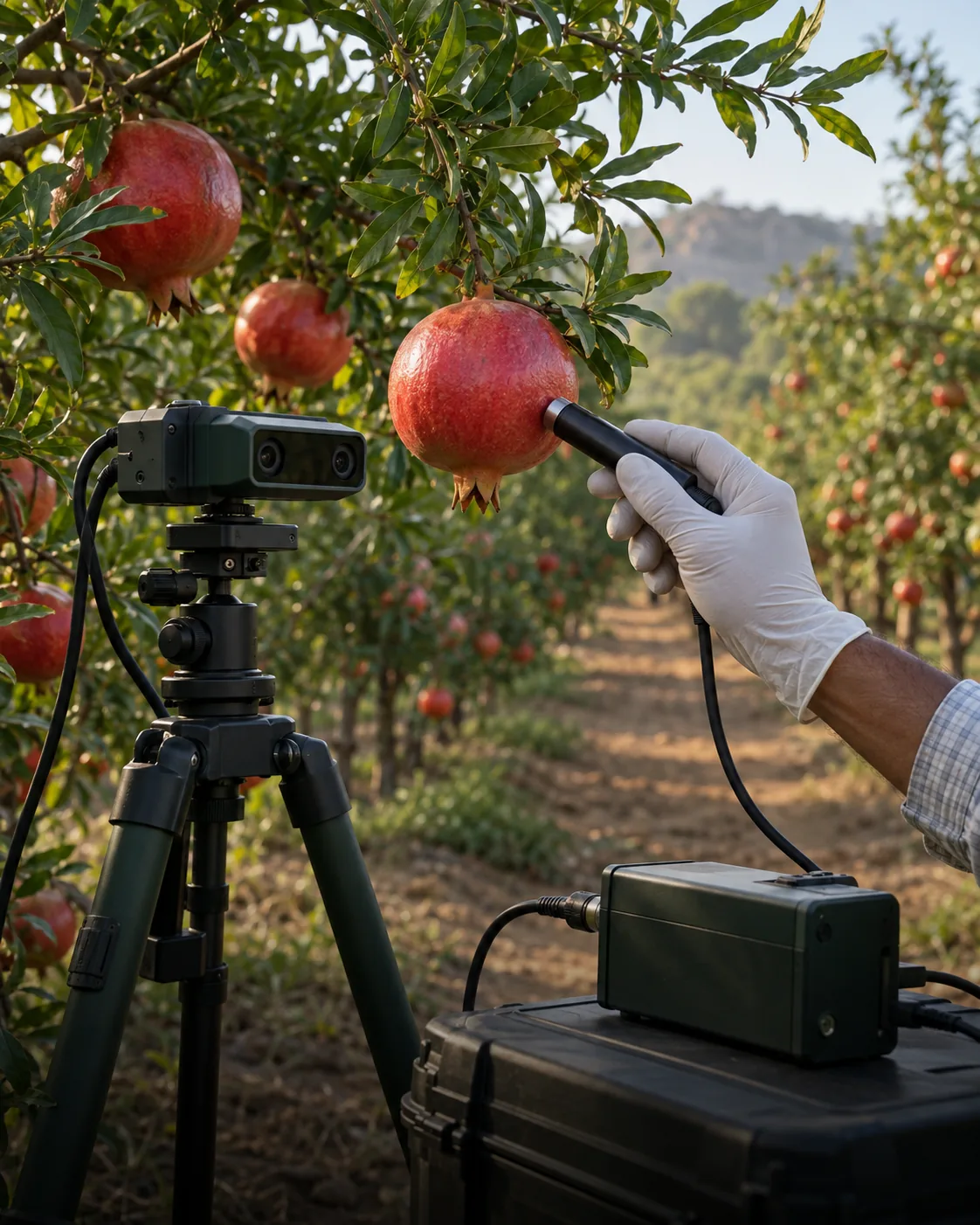
Record location, assessed fruit characteristics, size and grade distribution, harvest timing and availability. Show what was observed, what was estimated and what needs checking.
Connect buyer requirements with current offers, available quantities and relevant transaction outcomes. Assess quality, timing, delivery and payment terms together.
Evaluate destinations for different portions of the crop alongside harvesting, grading and transport needs. Keep any unplaced quantity and unresolved conditions in view.
FOUR COMPLEMENTARY SOURCES OF EVIDENCE
Each view answers a different question. We’re developing a workflow that connects them to a practical decision: which uses and destinations could suit this fruit?
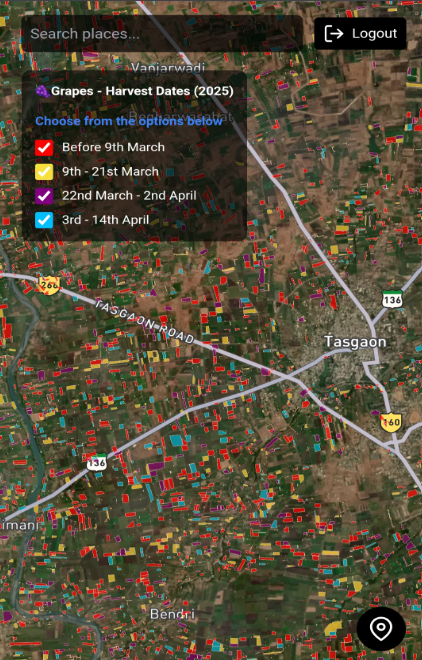
Use remote observations to guide orchard discovery, track changes and prioritise field visits. The landscape view adds context; fruit characteristics still need close assessment.
This grape harvest-date example shows field-level information in its geographic context. Our pomegranate focus brings that wider view together with orchard visits and fruit assessment.
Assess colour, shape and visible surface condition against buyer-specific requirements. Preserve the observations so that different markets can evaluate the same fruit on their own terms.
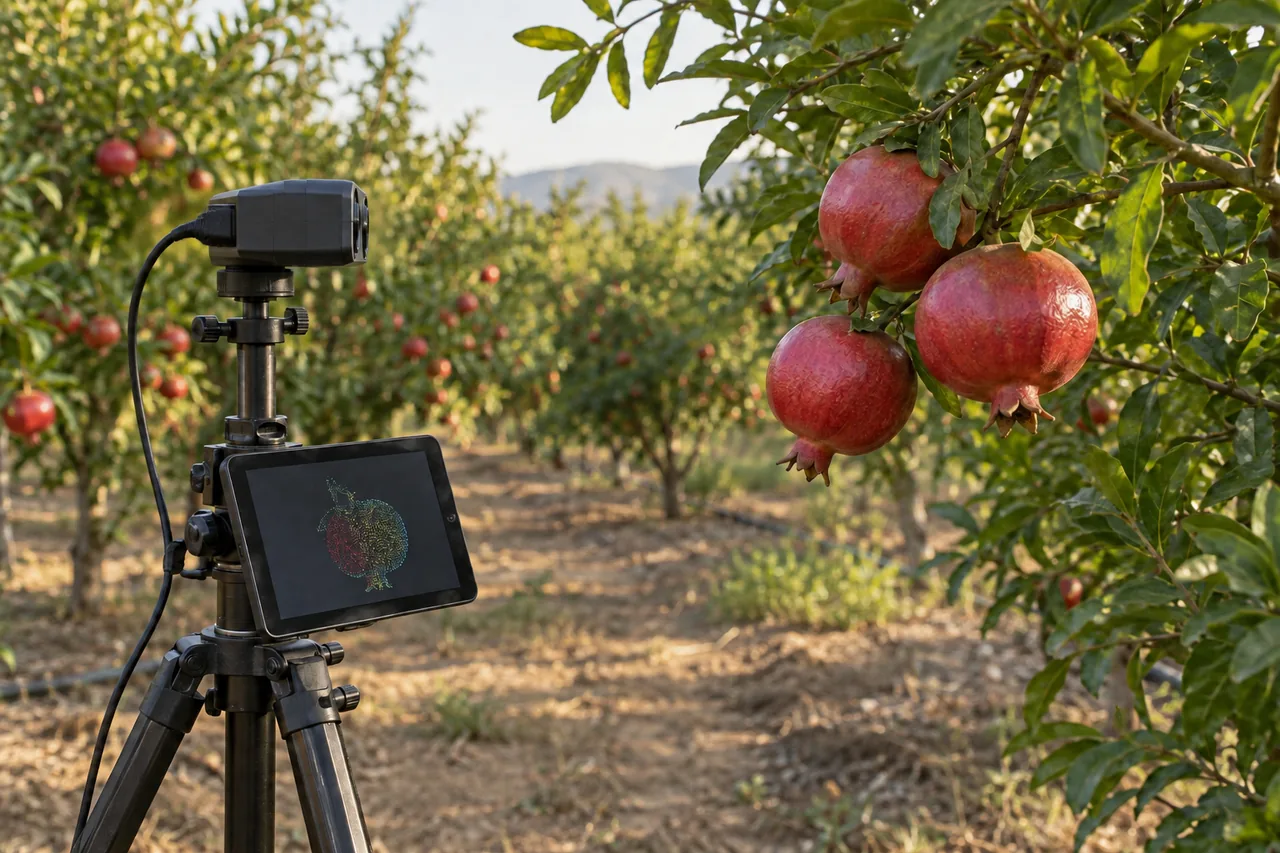
Use fruit detection and size estimates from assessed samples to build a picture of the size distribution. A whole-crop decision needs more than one average fruit or a few selected photographs.
Camera calibration, visibility and representative sampling are part of the validation work.
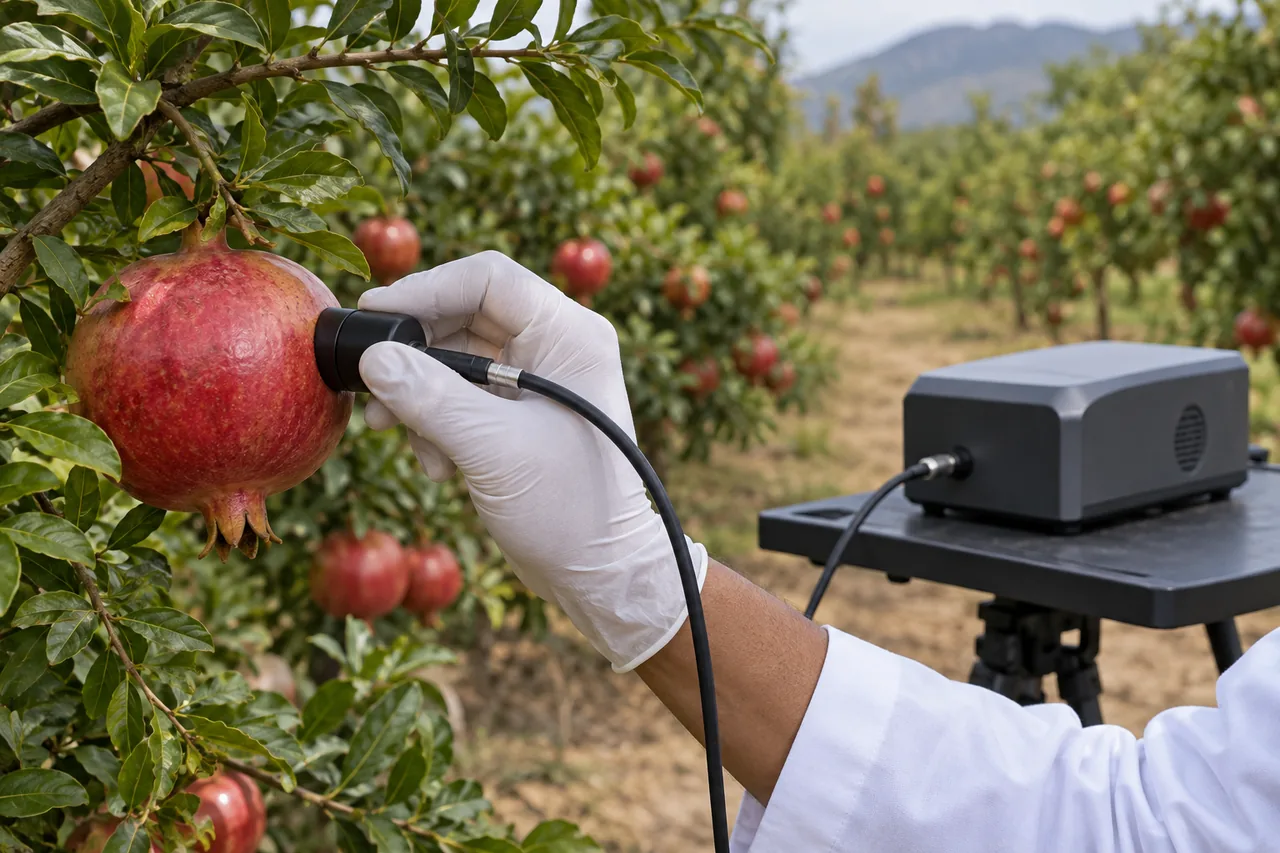
Bring internal inspection results—such as pomegranate aril colour and appearance—alongside size and surface observations. Connect every conclusion to the method and samples used to reach it.
Internal traits cannot be inferred reliably from rind appearance alone. Spectrometer-based estimates remain subject to validation.
FRUIT SIZE ESTIMATION / ORCHARD VISION
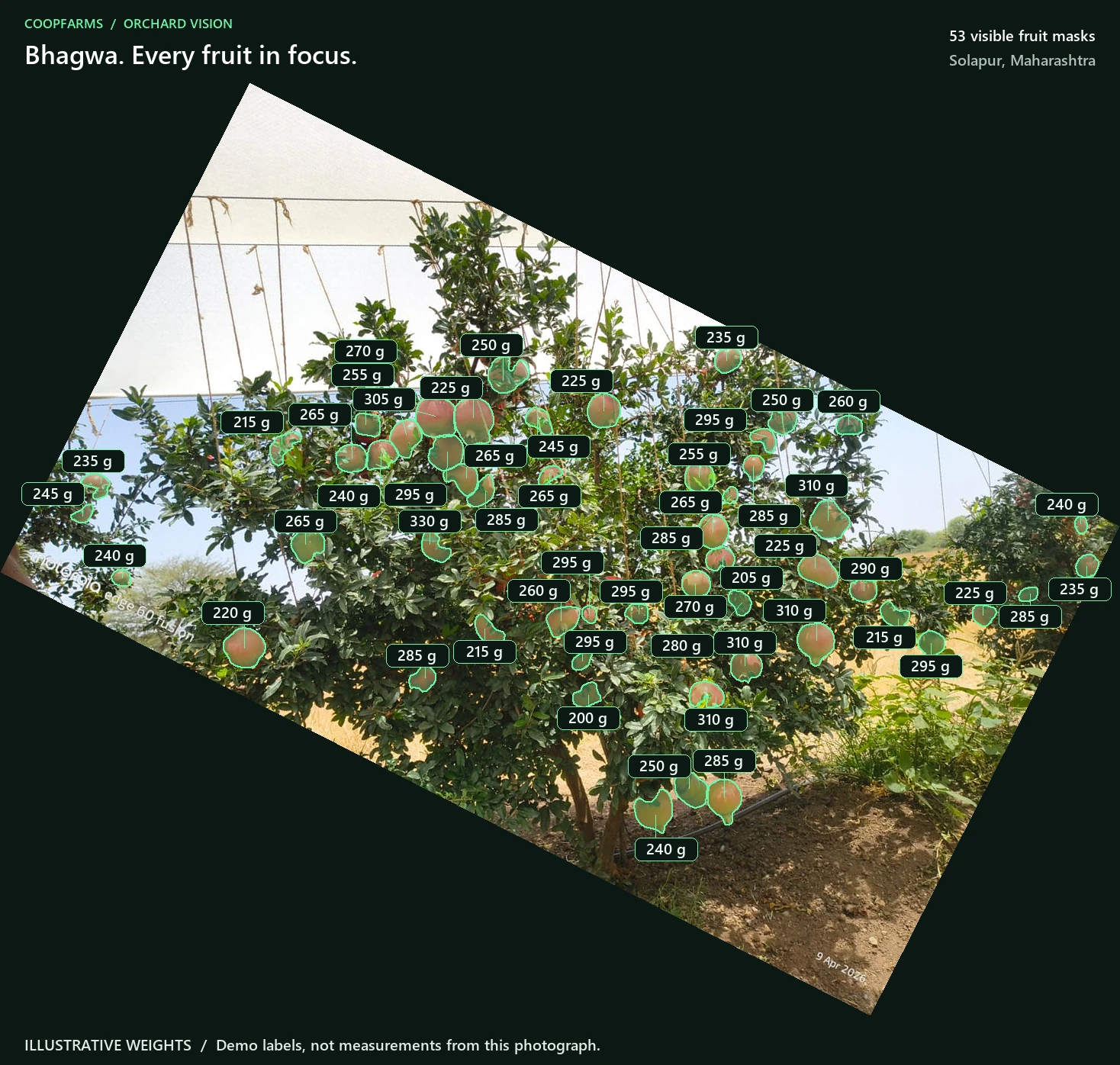
The orchard sensor images illustrate the proposed sensing setup. The integrated workflow is in development; measurements and market-fit estimates require field validation.
HOW IT WORKS
Our planned workflow keeps evidence connected to the decisions it supports, then learns from what happens in the field and in the sale.
Combine remote context, field observations and sampled fruit inspections. Record when the evidence was collected and the limits of each estimate.
Compare the assessed mix with buyer requirements, destination conditions and offers. Include quantity, location, timing and commercial terms.
Show possible outlets by grade, the work and conditions needed to proceed, and any quantity still without a destination.
Compare expectations with what was harvested, accepted, delivered and paid for. Use those outcomes to improve the next assessment.
EVIDENCE AND COMMITMENTS
A potential outlet, a current offer and a confirmed order carry different weight. Our approach keeps those distinctions explicit, so participants can see what supports a decision and what remains open.
Sometimes the useful decision is to pause: the terms do not work, the evidence is too weak, or too much of the crop remains unplaced.
WHO IT’S FOR
Local knowledge, relationships and execution matter. Coopfarms aims to make that work easier to share, check and build upon across transactions.
Help prospective buyers understand the fruit before harvest. Build a clearer basis for discussing the full mix, including the portions that are harder to place.
Evaluate supply against your quality, quantity and delivery requirements. See which possibilities have supporting evidence and which terms still need confirmation.
Carry useful observations across counterparties and transactions. Spend more time coordinating workable trades and resolving the details that need local expertise.
OUR LONGER-TERM VISION
Today, an orchard buyer may have to discover supply, assess fruit, find outlets, organise execution and provide capital. We aim to make those capabilities easier to combine across participants.
A grower brings supply. A scout adds field evidence. A buyer specifies demand. An operating partner coordinates the physical work. A common view of the arrangement helps them act together.
Connect assessments with acceptance, delivery and payment outcomes. Over time, that history could make future evaluation less dependent on repeating the same discovery work.
In time, capital partners could assess a defined operation with its responsibilities, evidence and risks made explicit. Financing is a future partner-led possibility, not a service currently offered.
Starting with pomegranates, our ambition is to build commercial understanding that more participants can use—across orchards, destinations and trade cycles.
Explore a collaborationCOOPFARMS TECHNOLOGIES
Coopfarms Technologies Private Limited is developing commercial intelligence for fresh produce, starting with the realities of pomegranate production, procurement and wholesale trade.
Our focus is the connection between fruit evidence and workable commercial possibilities—before harvest, purchase and dispatch.
HELP SHAPE WHAT WE BUILD
Tell us what you need to source, sell, assess or coordinate. We welcome conversations with growers, scouts, orchard buyers, exporters, wholesalers and operating partners.
Discuss your requirementsShare your role, location and the trade decision you’re working through. We’re interested in the evidence that would make that decision easier.
Explore a collaboration